July 25th is historically recognized as International Day of Black Latin American and Caribbean Women, and in Brazil, the date is combined with the National Day of Tereza de Benguela, a quilombola leader and symbol of Black resistance. More than just a milestone on the calendar, the date was established to draw attention to actions against racial and gender inequalities, as well as to celebrate the achievements and resistance of Black women.
A date of struggle and resistance
The date originated in 1992, during the Meeting of Black Latin American and Caribbean Women in the Dominican Republic. At the time, the Network of Afro-Latin American and Afro-Caribbean Women was also created, with the aim of combating racial and gender inequalities. The groups were dedicated to reversing the alarming scenario of violence and inequality affecting the Black population, promoting debates, discussions, and initiatives to combat this reality.
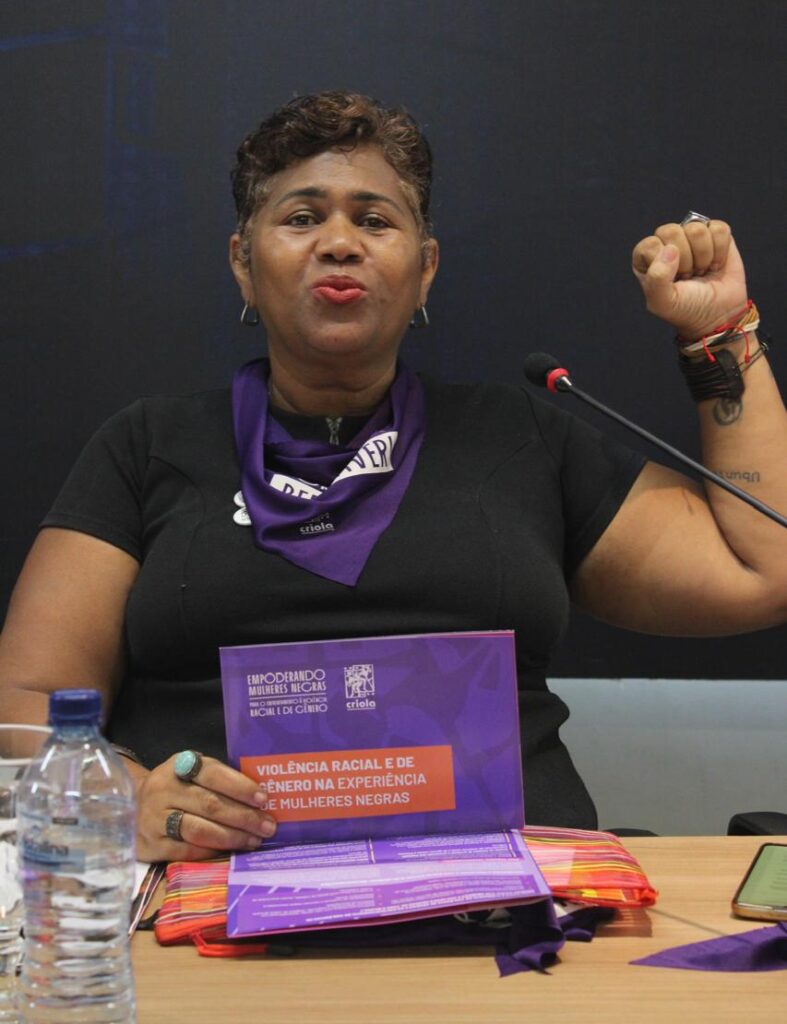
"July 25th isn't contemplative, it's deliberative," notes Andreia Souza, a Black leader, cultural manager, and RenovaBR alumni. "Throughout the month, we build dialogue, build bridges, and foster the Black women's movement and march. It's a day for reflection, yes, but also for vocalizing our needs, desires, and progress in combating racism and sexism," she adds.
In Brazil, the date also honors Tereza de Benguela, a quilombola leader and symbol of resistance. "Having this reference is essential. We're used to talking about combative men, but having a figure like Tereza reinforces the importance of women in the struggle," adds Andreia.
Persistent inequalities
According to data from the Center for Studies and Data on Racial Inequalities (CEDRA), which analyzed data from the National Household Sample Survey (PNAD) between 2012 and 2023, Black women represent 27.8% of the Brazilian population and continue to be the most affected by poverty and inequality. During this period, the proportion of Black people living in extreme poverty rose from 70.5% to 73.5%. In terms of income, Black women earn, on average, 60% of the income of white women and less than 45% of the income of white men.
Andreia points out that, beyond socioeconomic barriers, there's structural racism that affects access to power. "A white woman says she has an education, and that's enough. A Black woman needs to prove it with a certificate. We see Black women in commercials and soap operas, but in the decision-making spaces of companies, are we really there?" she asks.
For her, change starts with literacy and celebrations of resistance like this day. "We need to have the story told from all sides. They say every story has three sides, and we usually only see two. The third side, our strength and resilience, must also be demonstrated," she states.
Education, racial literacy and public policy
When asked which public policies are essential to reducing inequality, Andreia is emphatic: "We need public policies that are not only about empowerment, but also about education. Racial literacy is necessary, combined with data and evidence, to understand where these women are and how to empower them," she explains.
Furthermore, Alumni emphasizes that it is important to remember to guarantee the mental health of these women, who live under the idea that they must be strong at all times.
She mentions that Brazil has relevant initiatives, such as SDG-18, adopted by social movements to strengthen the promotion of racial equality and combat structural racism. This initiative seeks to expand public policies and opportunities for the Black population in areas such as education, the labor market, and political participation. "We have quotas, but we need Black women not only to be candidates, but also to be elected," she emphasizes.
To transform the reality of racial and gender inequality, Andreia emphasizes that political education is vital. "Willpower isn't enough; you need capacity, and capacity is built. I believe everyone should have this education to understand their rights and responsibilities, so as not to be misled by false promises. Politics isn't an innate talent; it's something you learn," she concludes.
Andreia's journey and reflections reinforce that July 25th is not just a symbolic date, but a call to action. Combating racial and gender inequalities requires effective public policies, racial literacy, guaranteed mental health, and real opportunities for Black women to occupy decision-making positions. It is a collective commitment, which involves education, political training, and building a society where representation is not the exception, but the rule.
"We continue to make progress, but we need to ensure that these advances aren't merely symbolic. Our fight is for real opportunities, for literacy, for spaces of power that are accessible to all Black women," concludes Andreia.


