During LGBT Pride Month, Gabriel Mota emphasizes that welcoming is also a political act. A teacher and activist in Manaus, Gabriel is one of the creators of Casa Miga, a pioneering shelter for LGBT+ people and refugees.
With a trajectory marked by resistance and the desire to build a more just society, he recalls his own story of overcoming and talks about the role of education and politics as tools for inclusion and social change.
Personal experience as a path to politics
Born in Manaus, Amazonas, Gabriel is an activist for the rights of the LGBT+ community. A state and municipal school teacher, he also works as a community educator at the Fundação de Medicina Tropical, a reference hospital for tropical diseases in Amazonas, where he has coordinated a combined HIV prevention team since 2018.
The son of a single mother, his personal experience is almost completely linked to his work as an activist and political actor. Like many others, his adolescence was a period that greatly shaped his trajectory and was crucial for questions that led him to promote changes in society.
A RenovaBR alumni, the activist says that the training changed his political trajectory and, despite not having been successful in his candidacies for state deputy and councilor, politics was never out of his daily life.
“I was never the kind of teenager who experienced any kind of homophobia at school, not harshly. I experienced isolation, which is one form of homophobia. But physical violence never happened to me. Symbolic violence, which is verbal, came a lot from within the home,” he shares.
According to the activist, it was with his mother that he had to promote education about the LGBT community for the first time. “With the violence at home, facing prejudice and verbal abuse, I understood that I only had myself to myself,” he says.
Even though Gabriel had the support of his family, he didn’t have the main support, which was his mother. “So I had to educate my mother in this process, without knowing that I was educating her. I would put pamphlets next to her bed, or recommend films for her to try to watch.”
As soon as he entered adulthood, Gabriel was kicked out of his home due to family problems. Although he only stayed away for a short time, as he had to return to take care of his mother's mental health, the moment was crucial in making him question what happens and where people go when they lose their roof over their heads. “From the moment these questions entered my head, I began to question what the LGBT movement was, especially in my region,” explains Gabriel.
Casa Miga: the first shelter in the north of the country
The activist began to investigate what other people in the community felt about the strength of the movement in Manaus through social media. From this broad debate, a first collective called Manifesta LGBT+ emerged, which brought together young people to talk about their experiences, gender and sexuality, health, education and acceptance. The collective then became a reference for a new wave of the LGBT movement in Manaus.
The conversation about what it means to be kicked out of your home began with stories and experiences from people in the community. So, Gabriel and other colleagues got together to design a project for a welcoming home inspired by examples from other regions around the country. That's how Casa Miga came about, becoming the first shelter in the north of the country.
The activist says that, at first, the project received numerous rejections, mainly from the government, which did not believe in the cause. However, over time, the activities managed to raise enough money to get the project underway, mainly through donations, such as the promotion of cultural activities. With the events, Casa Miga began to gain visibility and began to attract workers willing to help with the cause. In addition, institutions began to invest and expand the project, such as UNHCR (the UN Refugee Agency), which approached them so that the Casa could become a national reference in welcoming foreigners, mainly Venezuelans who were going to Manaus due to the humanitarian crisis.
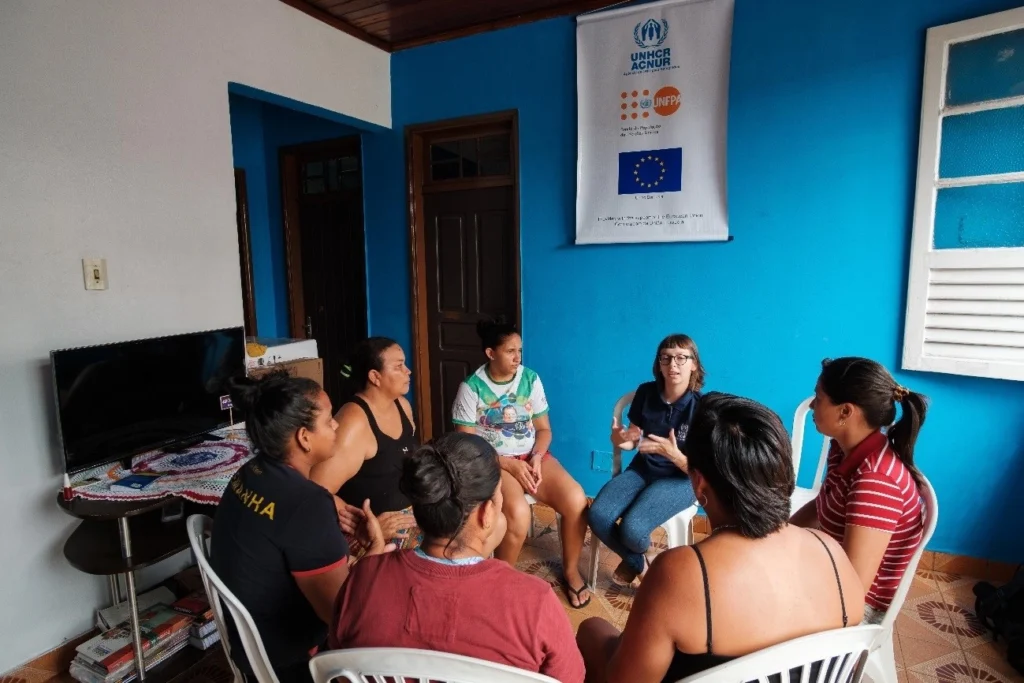
At the time, in 2018, the shelters began in a small, poorly organized place. Right from the start, they welcomed Venezuelan lesbian and transvestite women whose rights were being violated in conventional shelters. “Since then, we have managed to welcome more than 400 people, and many of them have been placed in the job market,” explains Gabriel.
“There is a lot of vulnerability involved in foster care, both for those who are thrown out of their homes and for those who come from a situation of homelessness and require psychological and psychiatric care, which is a challenge and bottleneck to be faced by foster homes, which often do not have this service available,” he adds.
According to Gabriel, employability is also a challenge when it comes to welcoming people who have been kicked out of their homes. “When people come in, they know they won’t stay forever, so to bridge this gap and promote their reintegration, we started holding employability and creative workshops. In this sense, companies understood that they could be our partners too,” explains the activist.
He says that many people have had opportunities throughout their lives because they were welcomed by the shelter for a while, until they organized themselves. “Today, Casa Miga doesn’t just provide shelter, it also offers workshops and has become a reference for human rights. It’s almost a municipal LGBT reference center, but without the municipal structure that it could have,” he points out.
Diversity and inclusion in education
Teaching different age groups, Gabriel says he works on diversity and inclusion in his daily life in different ways. “In a classroom, sometimes students take heteronormative positions and I try to show that there are many forms of love and family.”
Paying attention to the first signs of sexism that children give is also a way to promote education. He shares that a young student put a clip in her hair and the boys in the class started making comments about it. “It was then that a second-grader said: 'Oh, the teacher is gay!' and I told him that, even if he was, it was okay. In other words, when they express themselves in this way, I try to do the opposite, to deconstruct it,” explains Gabriel.
With high school teenagers, education is based on cross-cutting content that presents protagonists of the movement and its importance in society.
Rights for all
When addressing the participation of LGBT+ activists in politics, Gabriel emphasizes that this is not just a fight for the community, but a cause for better access to and maintenance of education.
“When I say that I am LGBT+ and an activist, I am saying that I want people to have equal access. So that our children can go to school without suffering any type of violence. So that they do not suffer prejudice regardless of the type of health service they seek. When I fight for the acceptance of those who have been kicked out of their homes, I am fighting for the right to housing. So, I usually say that an LGBT+ person is not fighting just for themselves, but for issues that affect them in society,” says Gabriel.
During Pride Month, the activist reminds us that politics is not only about having a mandate, but also about occupying spaces. He also emphasizes that companies need to understand that there are countless initiatives that can be helped, not only in the month of June, and that everyone must be part of the change, so that it is truly effective and plural.


