Even with timid advances, Brazilian municipal politics still carries a historic gender deficit.
Despite representing the majority of the Brazilian population, with 51% of the total, women remain invisible in municipal power structures. Currently, they occupy only 18% of legislative seats in city councils and only 13% in city halls – figures that highlight the profound gender imbalance in local politics. How can this disparity be explained in a representative democracy?
O Municipal Electoral Inequality Map, developed by RenovaBR's Business Intelligence Manager, Eloá Monsores, provides an analysis of the bottlenecks that hinder women's advancement in decision-making spaces, highlighting not only persistent structural barriers but also possible ways to overcome them — among them, political qualification as a decisive factor for transformation.
Read also: From data to action: how electoral analysis can boost representation in politics
Municipal politics: women are still a minority in the Chambers
The underrepresentation of women in Brazilian politics remains alarming and reveals that the problem goes beyond the ballot box. It is, at its core, structural. According to data from the Municipal Electoral Inequality Map, in 2024, more than 131 TP3T municipalities in the country—a total of 737 cities—did not elect a single woman to the City Council. In another 291 TP3T—1,631 cities—there is only one female councilor among those elected.
Stories that reveal inequality
This is the case in Palmeira, Paraná, where Fabíola Mereles, a RenovaBR leader, is the only woman in the local legislature. At 22, she carries not only the responsibility of representing the population, but also the symbolic weight of breaking a 24-year cycle without women in her city's City Council.
"We haven't had a woman on the City Council for over 24 years. We've always seen them used as frontmen, to fill out the ticket. They never received the funding to be elected. So, my result caught our attention," Fabíola emphasizes.
Fabíola began her political career early, motivated by the lack of women in the municipal legislature. Her first attempt, in 2020, almost succeeded: she fell just four votes short of being elected. "That experience had an impact on me and made me want to do things differently in 2024," she recalls.
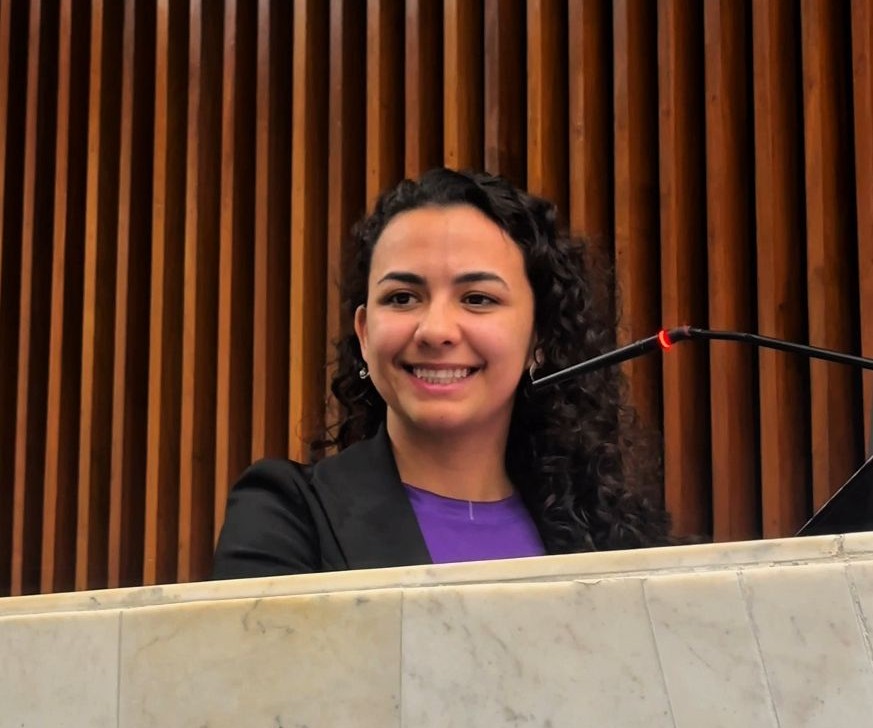
The young councilwoman attributes part of her decision to family encouragement and the support of a teacher, who emphasized the importance of representation. "Even without a voter registration card at the beginning, I managed to get the campaign off the ground. It all happened very quickly, but the pandemic ended up delaying the process, giving me time to organize myself," she says.
In that election, the harsh reality of unequal funding became clear. "My campaign was largely voluntary. At the time, the party gave me about 10,000 leaflets and 20 stickers. That was it. Meanwhile, the men had fuel and other materials, as well as contacts with business owners. Today, I look back and wonder how we managed that campaign," he says.
According to Fabíola, the lack of transparency regarding the use of quotas for women is a huge obstacle that prevents female candidates from taking advantage of all available strategies. "Women who don't know about party financing suffer enormously. Parties often choose women just to meet quotas, with no real intention of electing them," she states.
In 2024, the reality was different. Fabíola sought political training and found a differentiator in RenovaBR for her campaign. "I brought this idea of training to the campaign. I demonstrated that we needed prepared council members who knew their roles," she says. According to her, technical and strategic training made a difference not only in the election but also in her term.
Being the only woman in the Chamber brought unexpected challenges, including instances of political gender-based violence. "I've had to make decisions in votes where I needed support and had no one to turn to. I'm someone who values technique and evidence. But this isn't unanimous in these environments, and sometimes alliances prevail," she says.
She says she also feels there's an unequal pressure on her performance compared to the mandates of her male colleagues. "I have to prove my work twice, three times more. While a man who only goes to the session and committee meetings is seen as the best councilman, I need to be in the City Council every day, on the streets, studying, so that our mandate is representative. And even so, I have to prove that I'm a good councilwoman," she says.
For Fabíola, the fight for more women in politics is urgent: "My biggest dream will only be realized when I leave office and manage to elect other women and young people to occupy this space," she concludes.
Another reality, the same challenges
Even with a small increase in the number of women in the municipal legislature, which rose from 161 TP3T in 2020 to 181 TP3T in 2024, the growth rate shows that the barriers that impede this participation are not only the result of people's electoral choices, but also of a system that, year after year, drives women out of politics. Whether due to a lack of party support, unequal funding, or a political culture and environment still dominated by men.
Aline Flausino, a councilwoman in Goianá, Minas Gerais, also shares the resilience and importance of qualifications in her career. Her challenge to occupy spaces began in her childhood, in the rural area of the city. Raised on the former Fortaleza de Santana Farm, she grew up with a keen eye for inequality.
"The politics I've always known in the municipality were populated by older, white men from traditional families with strong family names. And how did I imagine a young girl, a Black woman, from the countryside, a community health worker, a recent graduate, a popular educator, finding herself in this space?" asks Aline.
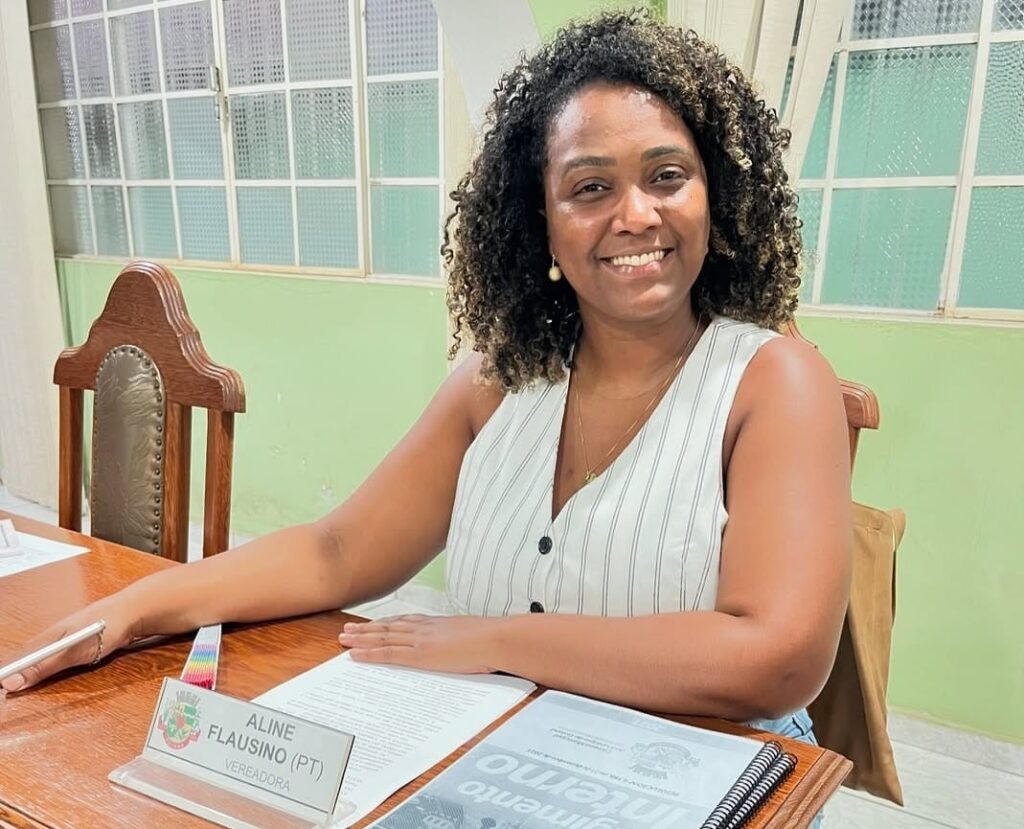
Her first impulse when asked to run in the 2019 elections was to decline. But reflecting on the impact of her absence changed her mind. "It was precisely because I didn't see myself in that space that I accepted the challenge. To represent those who had never been represented. To not see myself there and understand that, for other women, it was very important for me to occupy that space," she says.
In 2020, she became the city's most-voted councilwoman, and four years later, she regained the electorate's trust, remaining the only woman in the municipal legislature. Aline admits that the pressure was greater. "I observed many white, male councilmen who were also reappointed. Often, they weren't held to the same level of pressure as I was. To be reappointed and re-elected, I had to work very hard," she points out.
According to her, this result is the fruit of collective and participatory work, unlike the city's traditional politics. "I've always prioritized the people's struggle, with listening, genuine citizen participation, and transparent communication. In a city accustomed to the exchange of favors, I chose a different path," she emphasizes.
But breaking with historical patterns isn't easy. "Being in politics and in this space as a woman, Black, and young is very challenging. We face sexism all the time," she says. Aline also talks about the emotional impacts of this reality: "There's a mental overload that sometimes makes us sick. The political environment feels like it wasn't made for us. And that's exactly why we need to be in it: to transform, to occupy," she says.
Gender inequality in city halls: barriers and pathways to change
In 2024, only 732 women were elected mayors, compared to 4,800 men. This means that only 131 cities are led by women. In other words, 9 out of every 10 Brazilian municipalities are governed by men.
Even with a slight increase in funding for female candidates, the number of women in major positions still falls far short of reflecting the majority of the population. For Lucielle Laurentino, mayor of Bezerros, Pernambuco, and a leader trained by RenovaBR, inequality is not just a question of ability, but of opportunity.
"My trajectory proves that competence has no gender. The underrepresentation of women in politics isn't just due to a lack of ability, but also a lack of opportunity. We need to change this logic, and that starts by highlighting female leaders who deliver concrete results," she states.
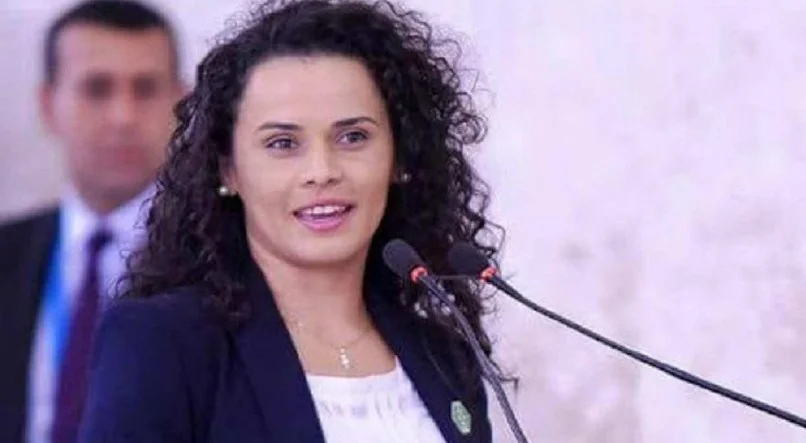
Lucielle governs a city in the interior of Pernambuco and knows that occupying this position requires more than preparation; it requires resilience. "Being a woman and leading the executive branch is challenging, but it's also a mission. Governing in a historically male-dominated environment requires firmness and legitimacy, and respect is earned through hard work and dedication," she emphasizes.
For the mayor, the figures shown in the Municipal Electoral Inequality Map reveal a structural obstacle stemming from a lack of encouragement and adequate support. "What still prevents more women from assuming the leadership of the Executive branch is not a lack of expertise, but the lack of a structure that allows women to dedicate themselves to public life. With the right encouragement, institutional support, and a focus on results, I believe more women will be ready to lead," she argues.
Lucielle's experience also demonstrates that change depends on support networks and political education. "No one advances alone. Networks break down isolation, education prepares us for leadership, and political parties have a duty to create real space, not just meet quotas. Supporting women in politics isn't a favor; it's a commitment to democracy," she reinforces.
Gender inequality in Brazilian politics remains a structural challenge that demands concrete and collective action. Training, support networks, transparency in resources, and genuine commitment from political parties are essential steps to balance representation. After all, strengthening women's presence isn't just about correcting a historical injustice—it's about ensuring a more plural, diverse democracy that reflects the society it aims to represent.


