Preparation for training new political leaders begins before classes begin. At RenovaBR, all Leadership Training begins during the Selection Process stage, which allows for the organization of a group of new political agents.
It is at this stage that those interested in entering public life come forward. In this context, the work of Gabriel Ferreira, better known as DJ, Data Manager at RenovaBR, stands out. He is one of the key players behind the structure that ensures efficiency and transparency for the RenovaBR Selection – and, consequently, for the training of new political leaders throughout the country. In an interview, DJ shares the behind-the-scenes story of this process.
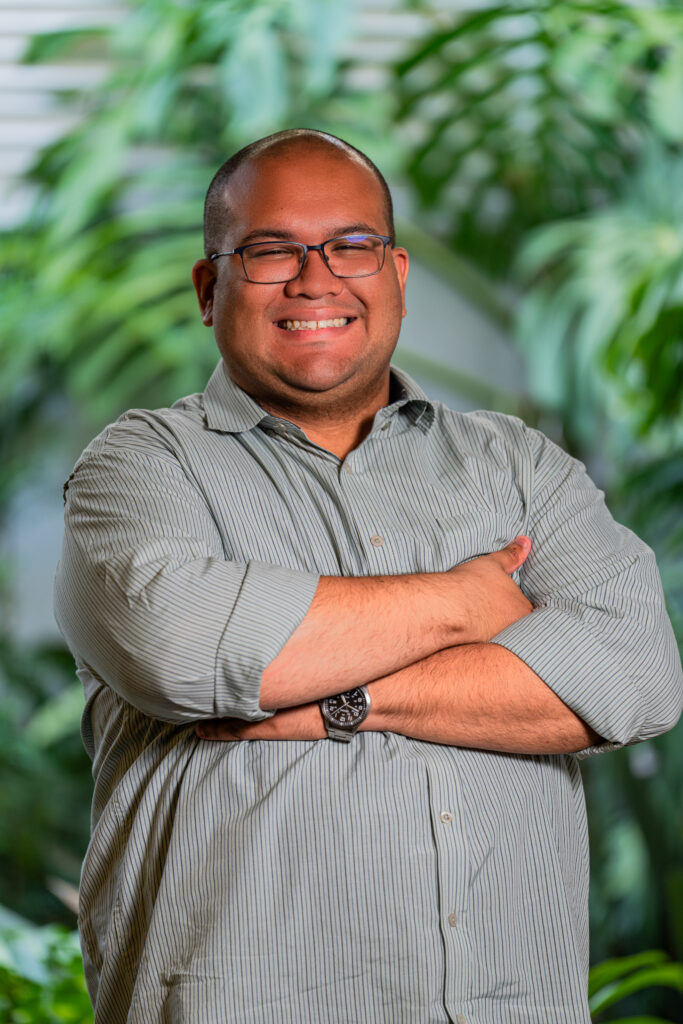
How long have you been part of the RenovaBR team and how would you describe your role? I've been part of the team for just over three years. I arrived here as an intern in 2022 and today I'm Data Manager.
My role is to take care of data distribution and collection, as well as understanding the procedures necessary for RenovaBR to be able to deal with the range of data that currently arrives, distributing it among the teams in the most efficient way possible.
Every time a new project starts, I am there to understand the technology and data aspects. But I also try to get involved in governance issues to put us in a positive position among other institutions. This way, we become a reference on how to deal with data.
You are responsible for conducting the Selection Process that allows the start of the Leaders Training. How does this step work? The selection process takes place in four simple steps. It all starts with a landing page that collects contact information from candidates. After that, the candidate is directed to a typeform, which is a standard first form, like a registration form. In addition, the candidate must answer a political context questionnaire so that we can understand who the candidates are and how they view the political game today.
After that, the person applying is directed to another form to submit a video, in which the potential candidate must present himself, his skills and explain why he wants to enter politics. Along with this video, the participant answers a few more ideological questions formulated in partnership with Rede Democracia+.
From there, some people are selected for the interview, which is when we meet them face to face. This is the stage where we see how the candidate behaves with certain pre-selected topics, in addition to answering ideological questions.
It is a short process, but it captures the essentials to be able to select a diverse class.
How to ensure transparency in the process and why is this essential for RenovaBR? We seek to ensure transparency first by creating our Participant Guide, a robust document made available to all who have registered. In it, we provide everything that future candidates need to understand about the process, what data is used, how they will be evaluated and what interactions we will have.
Transparency is important because it brings people to the National Team who are committed, engaged and understand what RenovaBR is demanding of them and what we will be delivering as well. We ensure transparency in communication and this is essential to attract people with a purpose. It would be difficult to bring people who are truly committed to transforming Brazilian politics if we were not direct with them and did not tell them what is important to us and what we want to build with them.
What is most challenging during the stages? On our side, the most challenging part is to bring representation. I think there is a large portion of the population that does not see itself in politics and does not trust it either. Convincing these people to join the National Team is difficult, because as much as they want change, most of them have the idea that “this is not for me”. It is challenging to win over people who are truly representative, even though we believe in them.
What is the most interesting part of the process? Seeing the people who come through the National Team and what their motivations are is really cool. It's nice to see ordinary people trying to get into politics and trusting RenovaBR to be a path. The more unexpected the profile, the more interesting it is. In addition, it's cool to see the curiosity we arouse in people and their interest in participating.
I think that for candidates the questionnaire stage is also interesting, because it provides insights for them.
Is there anything new in this year's Selection Process? Last year, the entire selection process was carried out via WhatsApp. It was a huge innovation at the time and caught people's attention because it was easy to do.
Today, we no longer use it that way, and I think the biggest innovation this year may not be that innovative: believing in the potential of less is more. We have reached a level of maturity where we understand that using simple integration tools is also a way to achieve a good level of understanding about the people who apply. The process is no longer so extensive and difficult for us to identify good leaders. The intelligence we have developed allows us to make the process shorter, more direct, more pragmatic and still ensure the quality of those being selected.
What do you expect from the results of the Selection Process? Select a cool, competitive and diverse class. We want the class to be broad, to encompass as many different ideas as possible, but with people who have the potential to be elected, or who have the potential to participate in an election. I hope to have, in a federal cycle, a class that is the face of Brazil.
For those who want to participate, I hope it was an interesting experience, that you enjoyed the journey and the proximity to RenovaBR.


