Chief of Staff at the Porto Alegre City Council, Sâmila Monteiro is one of the names that represent the new profiles in Brazilian politics. A former alternate councilwoman and leader of the LOLA Brasil (Ladies of Liberty Alliance) movement, Sâmila has a history of commitment to social transformation that encompasses challenges and achievements. Originally from Rio Grande (RS), the young leader stands out for her work in favor of women's representation in society.
A liberal activist and RenovaBR Alumni, she entered politics in 2020 as a candidate, when she was just a law student looking for concrete changes in society. That year, she was elected alternate councilor and during her term, she approved two highly relevant projects: a law to guarantee clear and updated access to information about regularizations and the “Aqui Tem Luz” project, which emerged with the concession of electricity in the city, guaranteeing lighting in areas undergoing regularization processes. Later, the leader ran for federal deputy in the 2022 elections.
Currently, Sâmila is the chief of staff, working on changes on a daily basis. “It means being on the front line and also working to align communication, monitor metrics, seek results, and always be connected to people’s daily lives,” she explains. The leader says that based on the real problems of the population, which arrive at her office door every day, procedures and laws end up undergoing transformations and being modernized.
Representation in politics
For her, obstacles in politics are daily from day one, whether due to the lack of resources available to carry out electoral campaigns, as well as challenges related to her profile: a right-wing, black, Christian woman from the outskirts of the city.
“The best way I have found, as a black woman from the outskirts, to conquer my space in politics is through my work, faith, joy in serving people and with a little self-esteem. It takes self-esteem to understand that I have the right to be in this space,” says Sâmila.
The leadership seeks representation and believes that parliament must be a balance of society in several aspects and that black women are important in the context of change.
“I want to see many black women acting in parliament, but with the strength that black women have, to address controversial issues and not be afraid of rejection. Since early on in my political journey, I have been rejected by several groups and I think our courage exists because we have had to deal with a lot of rejection throughout history,” she points out.
Leadership at LOLA Brazil in Rio Grande do Sul
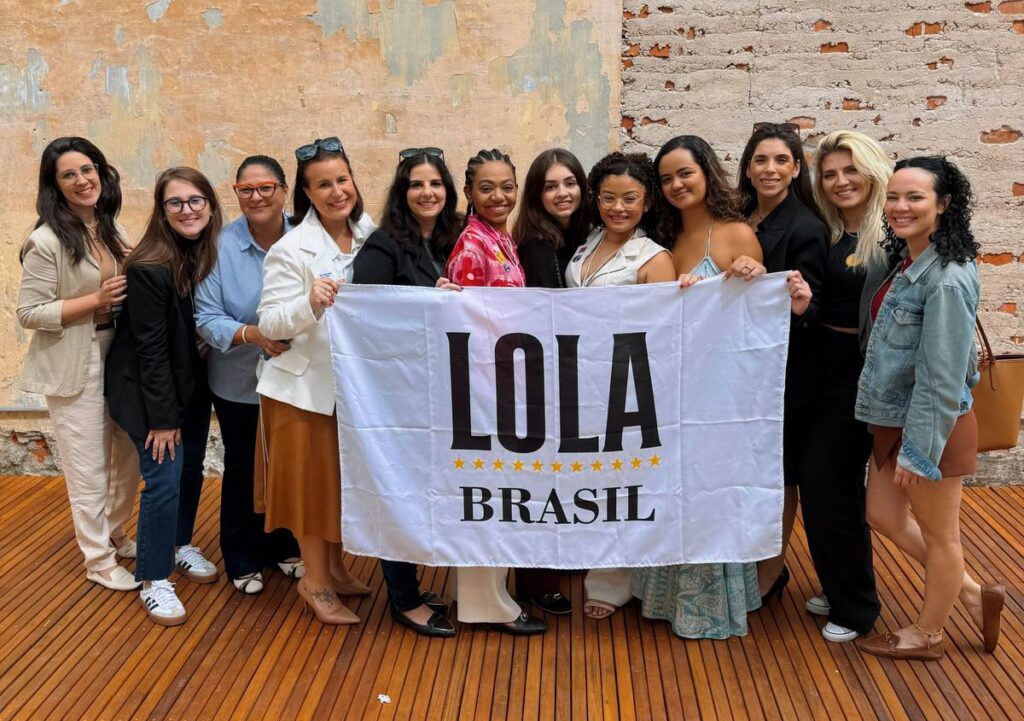
In 2023, she resumed LOLA Brasil's activities in Rio Grande do Sul, with the aim of expanding the liberal women's movement in the region. The institution has been present in Brazil since 2018 and aims to develop new leaders who contribute to the defense of economic, political and civil freedom.
“I wanted to connect with other women too, housewives, more mature women, and I saw in LOLA this opportunity to talk about freedom, but a freedom of everyday life, which is intellectual, but also social. A project that goes to the cutting edge and deals with different versions of women: the hairdresser, businesswoman, economist and housewife,” comments Sâmila.
The Gaucho group was present at the Freedom Forum – the largest in Latin America – serving as a voice for other women who, until then, were not familiar with LOLA and the freedom movement.
Sâmila explains that LOLA Rio Grande do Sul's work ranges from fundraising to operations and assistance to LOLA Brazil. She shares that one of the group's most emblematic actions was coordinating a group of Brazilian and Venezuelan women in support of the release of Maria Oropeza, a LOLA Portuguesa leader who was illegally imprisoned by Nicolás Maduro's regime in Venezuela in 2024. Through LOLA Brazil's groups, a complaint was filed with the Inter-American Commission on Human Rights demanding Maria's release.
“LOLA is what allows me to do this kind of thing, which gives me the support to speak out and fight for women’s freedom. We won that case, but because it was a dictatorship, Maria remains in prison. I believe it is a great example of our potential to strengthen women in politics,” she points out.
Politics and looking to the future
Sâmila points out that politics is not just about experience and intuition, but about data, evidence and science. According to her, her training at RenovaBR helped her understand that technical robustness and hope are necessary to transform realities.
“I think that more than courage and being tough, resilience is the word I would like to remember to motivate women in politics. There will be good days, but there are also difficult days in politics. The results do not necessarily happen when we want them to, but we need to continue insisting on our values,” she concludes.


