With almost two decades of experience in public management and a history of working in social areas, Claudia Carletto has witnessed concrete transformations in socio-educational units in the State of São Paulo.
At the head of the CASA Foundation, Alumni RenovaBR celebrates an expressive milestone: more than 2 thousand teenagers who are serving socio-educational measures completed professional training courses in 2025. The initiative is part of a management that believes in education as a bridge to redefine the future of young people in vulnerable situations.
“Within the Foundation, we are managing to implement a policy of humanity and support for adolescents who have committed criminal acts, understanding that their time here is the period that the State has to help these young people rebuild their stories, giving them the possibility of a future”, explains Claudia.
Professional courses for young people offered by the CASA Foundation
Professional courses are part of the Law on the National Socio-Educational Assistance System (Sinase) 2012 and, in the project, 47 course options were offered in various areas, such as administration, IT, fashion, customer service, marketing, sales and culture. All classes took place within the socio-educational centers themselves, through partnerships with SENAC-SP, SEBRAE-SP, Fundação de Apoio à Tecnologia (FAT), Fundação Bradesco, Centro Paula Souza and others.
“Professionalization is part of the socio-educational measure as a beginning for these teenagers, because we understand that they need to identify a vocation to achieve qualification and become income generators in the future”, explains Carletto.
Having been at the Foundation for a year, Carletto says that the biggest challenge for public management is to bring organization, modernity and management to government structures. “Bringing in professional training courses means supporting improvements in formal education, given the high educational gap among adolescents. We have been able to build future repertoires and make progress in the area of socio-education. Now, we are working on improving professional training courses, bringing in more teachers from the public school system and establishing partnerships,” he says.
For Carletto, the impact of opportunity is what turns the game around. According to her, young people can leave the centers knowing that there is a prospect, even when they return to the region they were in before. “This is the most delicate moment, when they need to understand that it is possible to rebuild their trajectory while still being in the region that led them to commit crimes,” explains Claudia.
Despite being a great challenge, the Foundation also has a post-measure program called After the Morning, which monitors adolescents from the moment they leave the facility for six months, together with a multidisciplinary team. According to the president of the Foundation, in May of this year, the recidivism rate of adolescents who went through the centers and returned was 20% and, despite representing a positive success rate, the institution is still pursuing a higher number.
Public policies that promote change
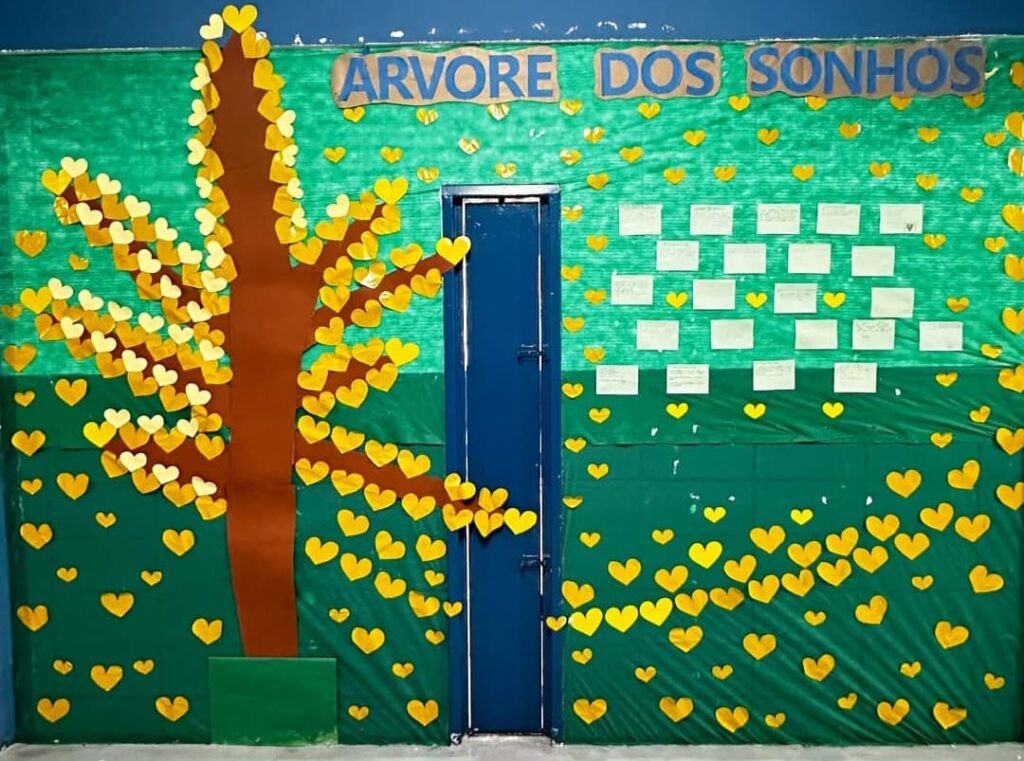
In addition to the availability of courses, Carletto emphasizes that this transformation is only possible with the support and courage of the staff to dream with these young people. She shares that within some centers, teenagers hang small notes on a kind of “dream wall”, with the intention of changing the course of perspectives that are hindered by inequality.
“Although it may sound cliché, what new political leaders must consider is that young people are our future. Investing in young people is a fundamental step for all political leaders, because there is no public social welfare policy that does not speak to this public. It is from the youth that we will have the perspective of a more mature, settled and developed society”, comments Claudia. For her, this is the mission of every citizen, but especially of those who are willing to take care of “public affairs”.
Trajectory in public management
The professional career of the current president of Fundação Casa was marked by continuous work in public management, with emphasis on her participation in 2005 in the newly created Municipal Secretariat for People with Disabilities in São Paulo, where she worked alongside the then secretary Mara Gabrilli.
As he says, this initial experience, amid the construction of a new administrative structure and in dialogue with the Legislature and civil society, consolidated his commitment to the development of public policies.
Over the course of almost 20 years, she held different strategic positions in public management, including communications at the Legislative Assembly, executive secretary of Women's Policies; in addition to having served as municipal secretary of Human Rights, leading impactful actions during the pandemic period, such as the Cidade Solidária program, which distributed food and guaranteed support to the homeless population.
Before assuming the presidency of the Casa de São Paulo Foundation, Carletto served as Executive Secretary of the Secretariat for People with Disabilities of the State Government.
Photo: CASA Foundation Disclosure


