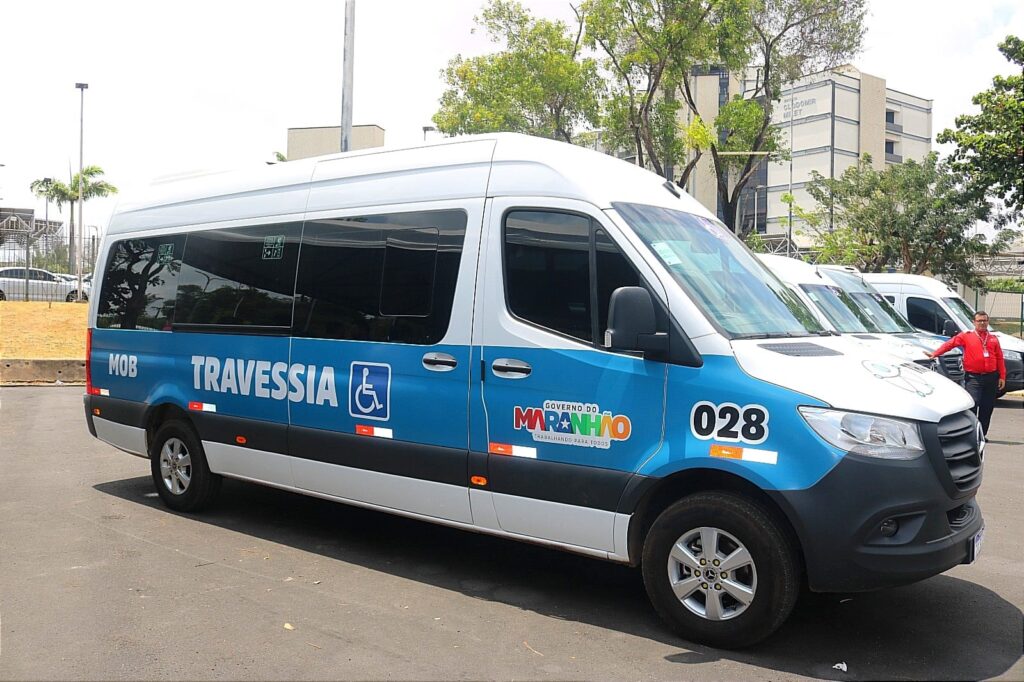
From the outskirts and with a trajectory marked by the fight for inclusion and social justice, Isabelle Passinho da Silva has been transforming urban mobility in Maranhão into an example of public policy aimed at people with disabilities.
Having served as a legislative advisor in the Legislative Assembly of the State of Maranhão, Alumni RenovaBR uses her own experience as a woman with disabilities to increase the political and social participation of those who have long been left out of decisions made in positions of power. Her work shows that representation matters and can change lives.
“Being a woman in today’s society is already a challenge, but when you consider women with disabilities, there are what we call layers of barriers that overlap. So, women with disabilities end up being more vulnerable and facing even greater challenges to occupy their space,” Isabelle highlighted in an interview given earlier this year to TV Assembleia do Maranhão.
Inclusive mobility as a bridge to health, education and citizenship
Currently, the activist is the director of Inclusive and Air Mobility of the State Agency for Urban Mobility (MOB), where he coordinates the Travessia Service – a program that guarantees free and accessible door-to-door transportation for people with disabilities and reduced mobility, to facilitate access to health services, education, work and leisure. Children with microcephaly and other neurological diseases, as well as the elderly and people with disabilities, are also covered by the service.
Implemented in 2016, the Travessia Service is a national reference in inclusive mobility, serving more than 16,000 registered people – including regular and occasional users. It is currently available in three modalities in 43 cities in Maranhão – Travessia Clássico, Travessia Melhor Idade and Travessia Mais Saúde. As it expands, it will also meet the demand of atypical mothers of children with microcephaly, in order to increase the possibilities of free transportation for health treatments.
“This advancement was suggested by a group of atypical mothers of children with microcephaly and it came about precisely so that we have more opportunities to serve people. The person must have been registered for the service for at least six months. People who need transportation more than twice a week will have the opportunity to use the app for transportation,” Passinho explained in an interview.
It is through a policy committed to listening, inclusion and promoting real impact on people's lives that Isabelle Passinho acts as a reflection of good leadership.
Showing that representation is not just symbolic, but structural, she transforms her experience into public action, leading initiatives that respect diversity and guarantee dignity in people's daily lives.